
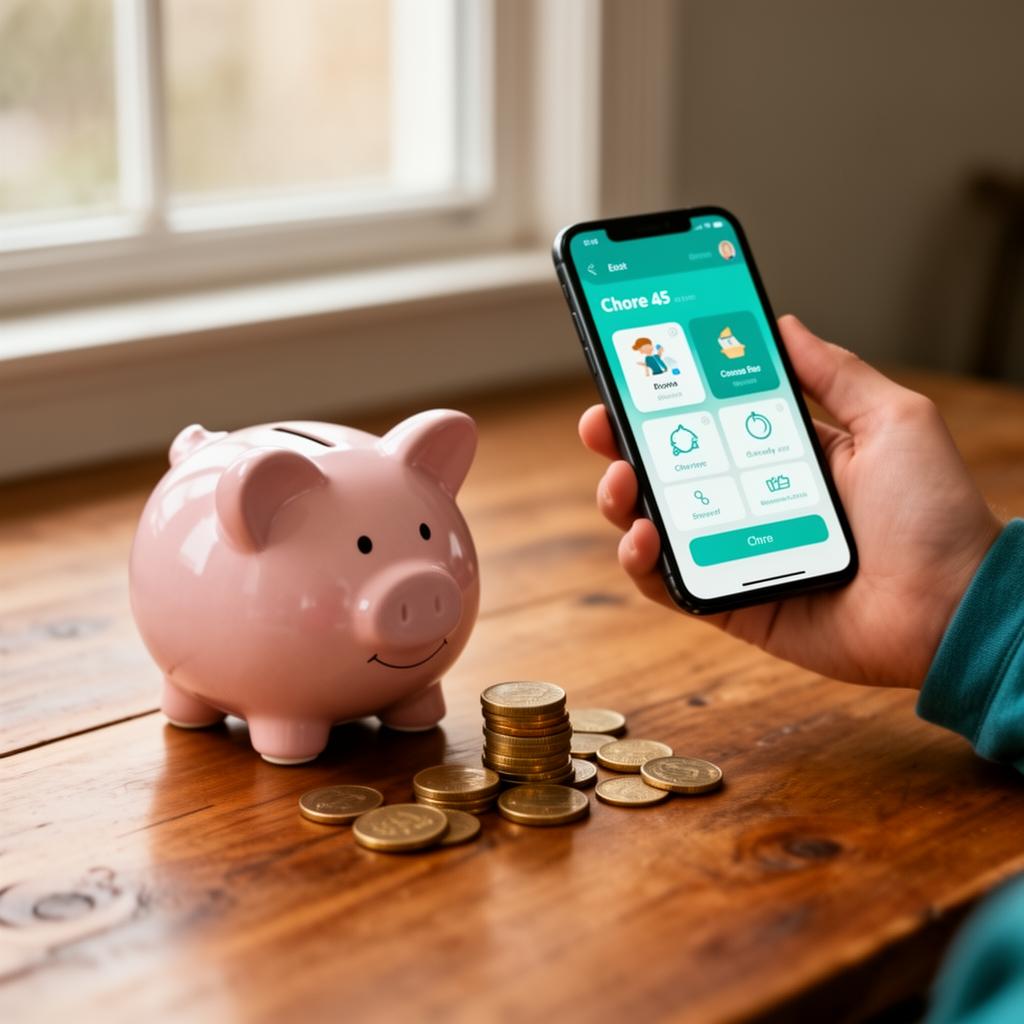
The first month with an allowance app feels like magic. The card arrives in the mail, the kid downloads the app, chores get done, money moves, everyone is winning.
Then somewhere around week eight or nine, something shifts. The chore that earned a dollar starts to feel like work. The reward stops feeling rewarding. Soon you're back to nagging — but now with a payroll system attached to it.
It's not that allowance apps like Greenlight, GoHenry, or BusyKid are doing anything wrong. They're excellent at what they're built for: teaching kids about money. The problem is most parents reach for them hoping to fix something else entirely.
What you actually wanted
If you signed your family up for an allowance app, the surface goal was probably "teach my kid about earning." But the deeper hope — the one that made you Google "best allowance app for kids" at 11pm — was usually one of these:
- Stop asking three times to take out the trash
- Get the morning routine to happen without a fight
- Make screen time end without tears
- Have my partner and I stop contradicting each other in front of the kids
None of those are money problems. They're structure problems. And paying a child to brush their teeth doesn't build the habit of brushing their teeth — it just adds a transaction to it. The day you stop paying, the brushing stops too.
The behavioral economics
There's a well-documented effect in behavioral psychology called the overjustification effect: when you reward a child financially for something they were already doing intrinsically, the intrinsic motivation often weakens. The behavior becomes "work for pay" instead of "what we do."
That's why month three is the inflection point. The novelty of seeing the dollar add up has worn off, the intrinsic "I did a thing because we live here together" muscle has atrophied, and you're left with a child who only does the chore when the cash is visible.
What works instead
The families who report lasting change tend to share a few things:
- A shared playbook both parents see. No app fixes the morning argument if mum and dad have different rules.
- Productive consequences for rule-breaking — not punishments, not lost privileges, just a small task that closes the loop.
- Rewards that aren't transactional. Tokens that earn movie night with the family land differently than a dollar that buys candy alone.
That's the model behind famio: a family operating system that separates the "teach money" job (which an allowance app does well) from the "build daily rhythm" job (which they don't).
You can use both
This isn't a versus. Plenty of famio families also use Greenlight or GoHenry — famio for the daily structure, the allowance app for financial literacy. They're solving different problems.
If you want the full side-by-side, we wrote it up here: famio vs. allowance apps. And if your friction is more about chore tracking than money, you might find famio vs. chore chart apps more relevant.